Market Overview
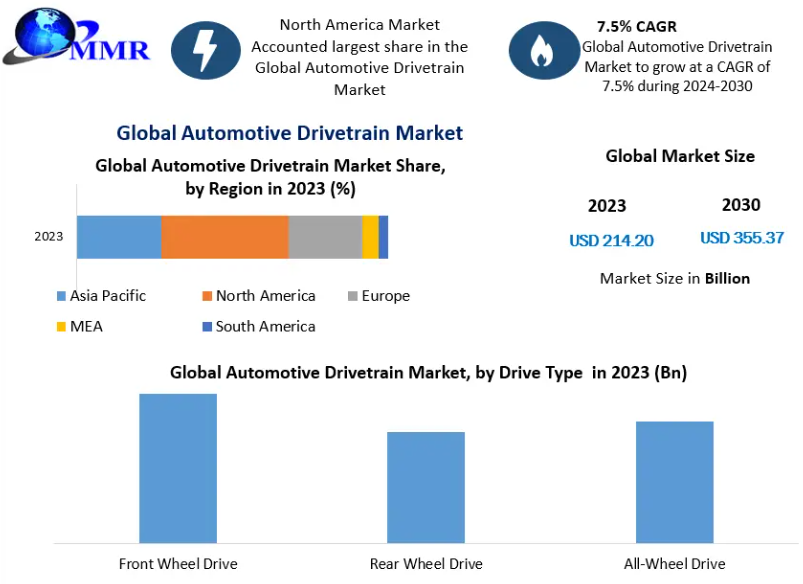
The Automotive Drivetrain Market was valued at USD 214.20 billion in 2023 and is expected to reach approximately USD 355.37 billion by 2030, registering a CAGR of 7.5% during the forecast period. The market is being supported by rising vehicle production, increasing passenger vehicle penetration, growing demand for fuel-efficient automobiles, technological advancement in powertrain systems, and the accelerating adoption of electric and hybrid vehicles.
Intrigued to explore the contents? Secure your hands-on sample copy of the report: https://www.maximizemarketresearch.com/request-sample/147838/
An automotive drivetrain is a collection of components responsible for transmitting power generated by the engine or electric motor to the vehicle wheels. Depending on the vehicle architecture, the drivetrain can include the transmission or gearbox, driveshaft, axles, universal joints, constant velocity joints, differential, and associated power-transfer components. The system enables efficient power delivery, torque multiplication, speed control, traction, and overall vehicle movement.
The transition toward electrification is significantly changing the structure of automotive drivetrain systems. Conventional internal-combustion vehicles rely on mechanical transmission and driveshaft arrangements, while electric vehicles increasingly use integrated electric motors, e-axles, reduction gears, inverters, and other electronically controlled components. As automakers invest heavily in electrification, drivetrain manufacturers are developing lighter, more compact, efficient, and electronically controlled systems.
Demand for advanced drivetrains is also influenced by the need for improved vehicle control under challenging driving conditions. All-wheel-drive and four-wheel-drive systems are particularly important for vehicles operating on snow-covered roads, uneven terrain, wet surfaces, and off-road environments. At the same time, stringent emission standards in major automotive markets are encouraging manufacturers to reduce vehicle weight, improve power-transfer efficiency, lower energy consumption, and integrate advanced drivetrain technologies.
Market Drivers and Trends
Rising Sales of Electric and Hybrid Vehicles
The rapid expansion of electric and hybrid vehicle sales is one of the major factors supporting the Automotive Drivetrain Market. Electric vehicles require specialized drivetrain architectures designed around electric motors and battery-powered propulsion. Automakers and component manufacturers are therefore developing dedicated electric drive systems that can deliver higher efficiency, improved acceleration, compact packaging, and optimized energy consumption.
Intrigued to explore the contents? Secure your hands-on sample copy of the report: https://www.maximizemarketresearch.com/request-sample/147838/
Hybrid vehicles are also creating demand for drivetrain systems capable of coordinating internal-combustion engines with electric motors. The combination of mechanical and electrical propulsion requires sophisticated power-management and transmission technologies. As governments and automakers continue promoting lower-emission mobility, demand for electric drivetrains, e-axles, and integrated powertrain modules is expected to increase.
Stringent Vehicle Emission Regulations
Governments across North America, Europe, and Asia-Pacific are implementing increasingly stringent regulations concerning vehicle emissions, fuel economy, and environmental performance. These regulations are encouraging automotive manufacturers to adopt drivetrain technologies that improve energy efficiency while reducing emissions.
Lightweight drivetrain components can contribute to lower vehicle weight and improved fuel economy, while electric drivetrain architectures can reduce or eliminate tailpipe emissions. E-axles and integrated electric drive systems are becoming increasingly important because they combine multiple functions into compact assemblies and can reduce packaging requirements.
The continued implementation of zero-emission vehicle targets and incentives for electric vehicle adoption is expected to create additional opportunities for drivetrain manufacturers. Automakers are consequently investing in electric propulsion platforms and next-generation drivetrain technologies to comply with regulatory requirements and meet changing consumer expectations.
Technological Advancements in Drivetrain Systems
Technological innovation remains a central market trend. Automotive companies are developing compact transmissions, high-efficiency motors, intelligent torque-management systems, advanced axles, integrated power electronics, and in-wheel drive technologies.
E-axles are gaining attention because they can integrate the electric motor, gearbox, inverter, and other components into a single unit. This architecture can simplify vehicle packaging while improving drivetrain efficiency. Similarly, in-wheel hub motors place the propulsion system directly within or near the vehicle wheels, creating opportunities for innovative vehicle designs and improved control.
Manufacturers are also investing in advanced materials and manufacturing technologies to reduce drivetrain weight without compromising durability. Improvements in software-based control, electronic torque distribution, and connected vehicle technologies are further enhancing drivetrain performance.
Growing Demand for Better Vehicle Control
Consumer expectations for comfort, handling, acceleration, traction, and driving stability are contributing to drivetrain market growth. Modern vehicles increasingly incorporate electronically controlled drivetrain systems capable of distributing torque according to road conditions and driving requirements.
All-wheel-drive systems are particularly attractive in premium vehicles, SUVs, performance automobiles, and vehicles operating in regions with difficult weather conditions. Advanced torque-vectoring systems can improve cornering stability and traction by controlling power delivery between individual wheels or axles.
Primary Market Constraints
High Cost of Advanced Electric Drivetrain Systems
The high initial cost associated with electric drivetrain technologies remains a major market constraint. Electric drivetrains can require specialized electric motors, power electronics, inverters, reduction gears, thermal-management systems, battery interfaces, and electronic control units. The integration of these components can increase manufacturing costs compared with conventional drivetrain architectures.
The cost challenge is particularly relevant in price-sensitive markets where consumers remain focused on vehicle affordability. Manufacturers are working to reduce costs through higher production volumes, component standardization, vertical integration, and improvements in manufacturing efficiency. As economies of scale improve, the cost gap between conventional and electric drivetrain technologies is expected to narrow.
Complex Manufacturing and Supply Chain Requirements
Advanced drivetrain systems require specialized materials, precision manufacturing, sophisticated electronics, and reliable supply chains. Shortages or price fluctuations involving semiconductors, rare materials, metals, and other critical components can affect production schedules and manufacturing costs.
The increasing integration of mechanical and electronic components also requires manufacturers to strengthen their engineering capabilities. Developing reliable electric drivetrains requires expertise in mechanical engineering, electronics, software, thermal management, and battery systems, creating additional development challenges for industry participants.
Key Market Segments
By Vehicle Type
Based on vehicle type, the Passenger Vehicle segment dominated the Automotive Drivetrain Market with a 78% share in 2023. The segment is expected to maintain a significant position throughout the forecast period because of the large global passenger vehicle fleet and increasing consumer demand for improved driving performance, efficiency, safety, and comfort.
The growing adoption of electric passenger vehicles is also changing drivetrain requirements. E-axles, compact electric drive modules, and advanced transmission systems are being increasingly integrated into passenger cars. Government incentives for electric vehicle purchases and expanding charging infrastructure are supporting this transition.
The Commercial Vehicle segment is expected to register strong growth during the forecast period. Increasing logistics activity, e-commerce deliveries, freight transportation, and urban mobility requirements are supporting commercial vehicle production. Electrification of buses, delivery vehicles, medium-duty trucks, and heavy commercial vehicles is also creating opportunities for specialized electric axles and drivetrain systems.
By Drive Type
Based on drive type, Front-Wheel Drive (FWD) represents an important segment because of its cost efficiency, compact design, lower drivetrain weight, and packaging advantages. FWD systems are widely used in passenger cars because the engine and transmission can be positioned efficiently within the front portion of the vehicle. The configuration can also provide suitable traction for many everyday driving conditions.
Rear-Wheel Drive (RWD) remains important in sports cars, luxury vehicles, performance automobiles, buses, trucks, and truck-based SUVs. RWD architectures provide advantages in weight distribution and performance applications. Increasing demand for premium vehicles and high-performance automobiles is expected to support the segment.
All-Wheel Drive (AWD) is gaining traction because of growing demand for enhanced traction, stability, and vehicle control. AWD systems are increasingly available in SUVs, crossovers, luxury cars, and electric vehicles. Electric propulsion also provides opportunities for advanced AWD architectures in which individual motors can control power delivery to different axles.
By Electric Vehicle Type
The Automotive Drivetrain Market can also be categorized into Battery Electric Vehicles (BEV), Hybrid Electric Vehicles (HEV), and Plug-in Hybrid Electric Vehicles (PHEV).
BEVs require dedicated electric drivetrain architectures and are expected to remain a major source of technology development. HEVs use both internal-combustion and electric propulsion systems, creating demand for sophisticated power-management and transmission solutions. PHEVs similarly require drivetrain systems capable of operating efficiently under electric and engine-powered modes.
Intrigued to explore the contents? Secure your hands-on sample copy of the report: https://www.maximizemarketresearch.com/request-sample/147838/
Regional Market Insights
North America
North America is expected to witness significant Automotive Drivetrain Market growth during the forecast period. The region benefits from advanced automotive manufacturing capabilities, high consumer purchasing power, strong demand for SUVs and pickup trucks, and increasing investments in electric mobility.
The United States is particularly important for drivetrain innovation due to the presence of major automakers and component manufacturers. Demand for electric vehicles, hybrid vehicles, advanced AWD systems, and electric axles is encouraging manufacturers to expand their drivetrain portfolios. Harsh winter conditions in parts of the United States and Canada also support demand for systems that provide enhanced traction and vehicle control.
Asia-Pacific
Asia-Pacific held the largest Automotive Drivetrain Market share in 2023, supported by high vehicle production volumes, growing urbanization, rising disposable income, increasing mobility requirements, and rapid adoption of electric vehicles.
China is a major contributor because of its large automotive manufacturing base and strong electric vehicle ecosystem. India is also emerging as an important market as vehicle production expands and electrification initiatives gain momentum. Japan and South Korea contribute significantly through advanced automotive technologies, drivetrain research, electric motor development, and component manufacturing.
The increasing demand for commercial vehicles and logistics transportation across Asia-Pacific is creating additional opportunities for heavy-duty drivetrain systems, electric axles, and high-efficiency powertrain technologies.
Europe
Europe represents another important market due to stringent emissions regulations, strong environmental awareness, and significant investment in electric and hybrid vehicles. Automotive manufacturers in Germany, France, the United Kingdom, Italy, and other European countries are developing electrified platforms and lightweight drivetrain components to comply with increasingly demanding environmental standards.
The transition from conventional vehicles toward electric mobility is expected to remain a major factor influencing drivetrain technology investments across the region.
Major Industry Players
The competitive landscape of the Automotive Drivetrain Market includes global automotive component suppliers, technology companies, and vehicle manufacturers. Major industry participants are focusing on new product development, electric drivetrain platforms, strategic partnerships, acquisitions, capacity expansion, and research and development.
Key players include:
- BorgWarner
- Aisin Seiki Co. Ltd.
- American Axle & Manufacturing
- Continental AG
- Magna International Inc.
- Marelli Holdings Co., Ltd.
- Mitsubishi Electric Corp
- Nidec Corporation
- Robert Bosch GmbH
- Schaeffler AG
- Valeo
- ZF Friedrichshafen AG
- Toyota Motor Corporation
- Hyundai Motor Company
- Volkswagen AG
- JTEKT Corporation
- AxleTech Corporation
- Dana Incorporated
- GKN PLC
- AVL List GmbH
- General Motors
- Ford
- Daimler Chrysler
Companies are increasingly concentrating on integrated electric drive systems, e-axles, high-efficiency transmissions, lightweight components, intelligent torque distribution, and drivetrain solutions designed specifically for electric and hybrid vehicles.
Frequently Asked Questions
1. What is the Automotive Drivetrain Market size?
The global Automotive Drivetrain Market was valued at USD 214.20 billion in 2023 and is expected to reach USD 355.37 billion by 2030, growing at a CAGR of 7.5% during the forecast period.
2. Which vehicle type dominated the Automotive Drivetrain Market?
The Passenger Vehicle segment dominated the market in 2023, accounting for approximately 78% of the market share. Its leading position is supported by high passenger vehicle production and increasing demand for efficient and technologically advanced drivetrain systems.
3. What are the major factors driving the Automotive Drivetrain Market?
Major growth factors include increasing global vehicle production, rising electric and hybrid vehicle adoption, stringent emission regulations, technological advancements, demand for improved vehicle efficiency, and increasing consumer preference for enhanced traction and driving performance.
4. What are the key restraints affecting the market?
High costs associated with advanced electric drivetrain components, complex manufacturing requirements, supply-chain challenges, and the need for specialized engineering capabilities are among the primary constraints affecting market growth.
5. Which region held the largest market share in 2023?
Asia-Pacific held the largest Automotive Drivetrain Market share in 2023, supported by high vehicle production, increasing electric vehicle adoption, expanding transportation networks, and significant automotive manufacturing activity across China, Japan, India, and South Korea.
Market Outlook
The Automotive Drivetrain Market is entering a period of substantial technological transformation as the global automotive industry moves toward electrification, connectivity, efficiency, and intelligent vehicle control. While conventional drivetrain systems continue to represent a major portion of the installed vehicle base, electric motors, e-axles, integrated drive modules, and advanced electronic control technologies are becoming increasingly important.
Explore More Reports
Global Agriculture Blowers Market https://www.maximizemarketresearch.com/market-report/global-agriculture-blowers-market/87403/
Global GaN on Silicon Technology Market https://www.maximizemarketresearch.com/market-report/global-gan-on-silicon-technology-market/33746/
Global Bucket Elevators Market https://www.maximizemarketresearch.com/market-report/global-bucket-elevators-market/105018/
Connect With Us:
MAXIMIZE MARKET RESEARCH PVT. LTD.
2nd Floor, Navale IT park Phase 3,
Pune Banglore Highway, Narhe
Pune, Maharashtra 411041, India.
+91 9607365656
sales@maximizemarketresearch.com
About Maximize Market Research:
Maximize Market Research is one of the fastest-growing market research and business consulting firms serving clients globally. Our revenue impact and focused growth-driven research initiatives make us a proud partner of majority of the Fortune 500 companies. We have a diversified portfolio and serve a variety of industries such as IT & telecom, chemical, food & beverage, aerospace & defense, healthcare and others.